
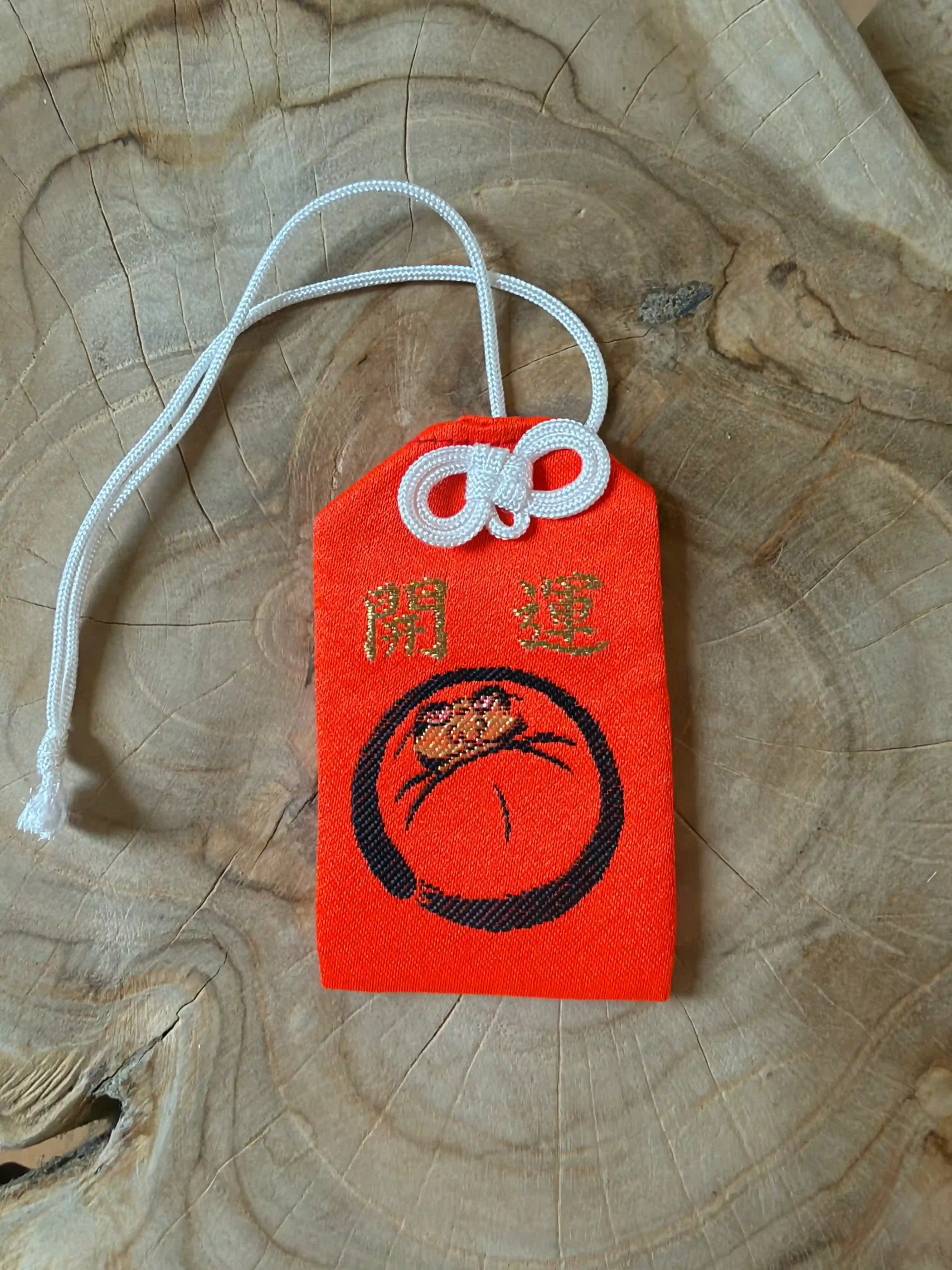
京都 金閣寺のお守りです。
真っ赤な生地に達磨様!インパクト強めです😀
This is a charm from Kinkaku-ji Temple in Kyoto.
It features a Daruma on a vivid red background, which leaves a strong impression! 😀
金閣寺は正式名称を鹿苑寺といい、相国寺の塔頭寺院の一つ。
舎利殿「金閣」が特に有名なため一般的に金閣寺と呼ばれています。
元は鎌倉時代の公卿、西園寺公経の別荘を室町幕府三代将軍の足利義満が譲り受け、山荘北山殿を造ったのが始まりとされています。金閣を中心とした庭園・建築は極楽浄土をこの世にあらわしたと言われ、有名な一休禅師の父である後小松天皇を招いたり、中国との貿易を盛んにして文化の発展に貢献した舞台で、この時代の文化を特に北山文化といいます。義満の死後、遺言によりお寺となり、夢窓国師を開山とし、義満の法号鹿苑院殿から二字をとって鹿苑寺と名づけられました。
Pure Land Paradise drawn by Ashikaga Yoshimitsu.
Its famous Golden Pavilion (Kinkaku)—actually a pagoda made to house the sacred relics of the Buddha—has given this temple the popular name of Kinkaku-ji (“Temple of the Golden Pavilion”), however the official name of this branch temple of the Rinzai-sect Zen temple of Shokoku-ji is Rokuon-ji. The temple was designated as a UNESCO World Heritage Site in 1994.
During the Kamakura period (1185-1333), this land was the site of a villa of the aristocrat Saionji Kintsune, known as Kitayamadai. During the Muromachi period (1392-1573), however, it caught the attention of the third Ashikaga shogun Yoshimitsu (1358-1408), who took over the site from the Saionji family in order to build his own villa, which he called Kitayamadono. This complex, whose gardens and architecture focused around a central Golden Pavilion, was said to evoke paradise on earth and was the destination of such esteemed visitors as Emperor Gokomatsu (r. 1392-1412), father of the Zen priest Ikkyû. The estate also became the center of the so-called “Kitayama culture,” which was central in importing various aspects of Ming-dynasty Chinese culture into Japanese society, thanks to increased trade relations with Japan’s continental neighbor.
After Yoshimitsu’s death, the villa was turned into a temple according to his will, with Musô Sôseki (also known as Musô Kokushi, 1275-1351) becoming its first abbot. The name Rokuon-ji was taken from the first two characters of Yoshimitsu’s posthumous name.
From Japan.
— WabiSabi Asobee
No comments yet.