
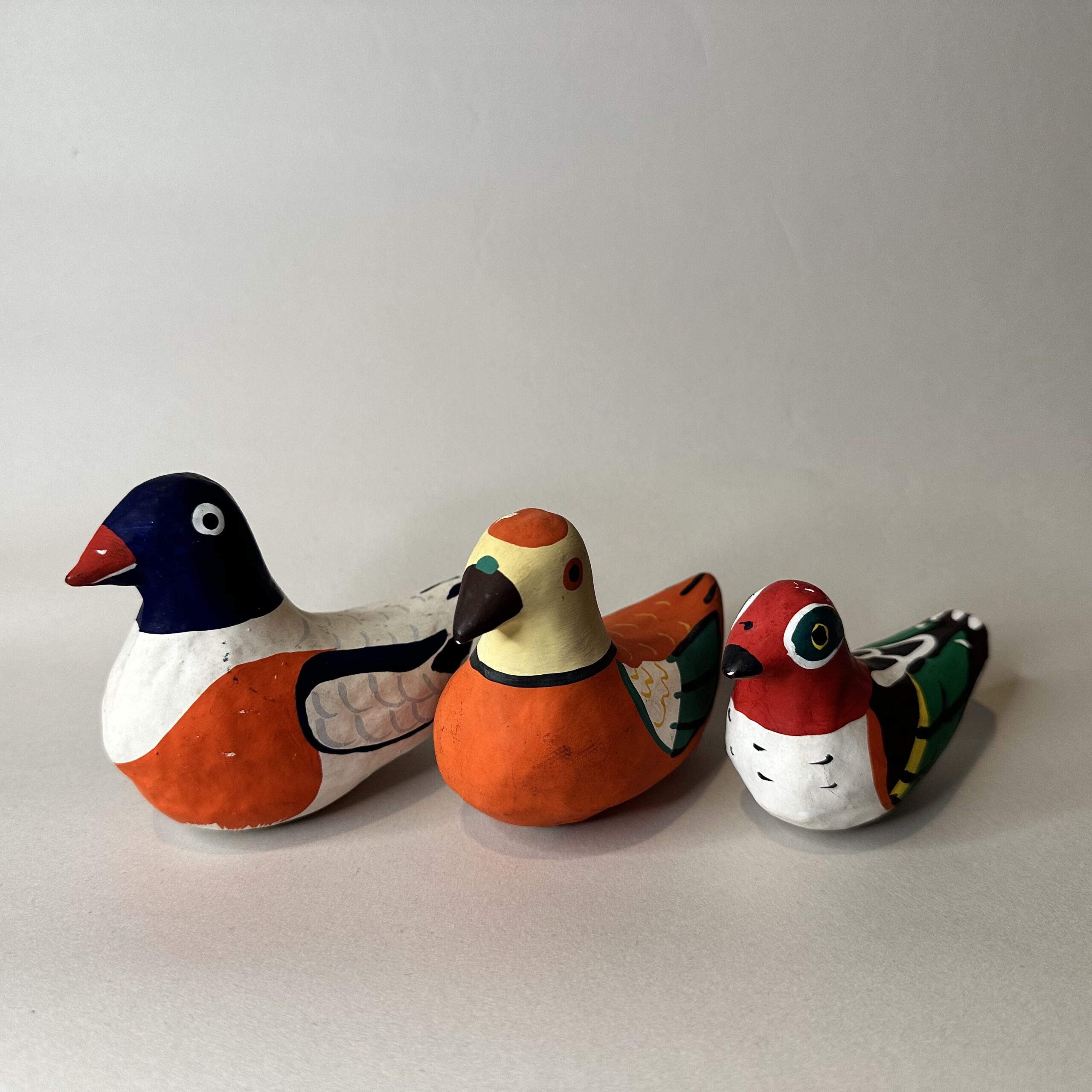
2月3日は節分です。
私が育った文化では、節分といえば「恵方巻き」を食べますが、
そばを食べる習慣もあるようです。
現在、大晦日に食べるそばは「年越しそば」と呼ばれています。
しかし、江戸時代に用いられていた旧暦では、
年の始まりは春の始まりとされていました。
そのため、その前日の節分にはそばが食べられ、
「年越しそば」と呼ばれていました。
現在では、もはやそのようには呼ばれず、
代わりに「節分そば」として知られています。
どのようなそばを食べるかについて、厳格な決まりはありません。
シンプルなかけそば、家の繁栄を願うニシンのそば、
長寿を願うエビ天そば、
学生のための鶏天そば、
そして……幸運を願う「鴨南蛮」。
そう、鴨です。
出汁の材料として使われ、縁起が良いとされ、
今では棚の守護神にまで昇格した――
鴨は実に多才な存在です。
豊作や家庭の安全を願って、
その恵みは尽きることがないようです。
節分の豆まきで厄を払い、
人生には――もしかすると、この鴨が役立つかもしれません。
幸運をもたらす鴨が、ちょうど届きました。
February 3 marks Setsubun.
In the culture I grew up with, Setsubun meant eating ehomaki,
but it seems there is also a tradition of eating soba.
Today, soba eaten on New Year’s Eve is called “Toshikoshi Soba.”
However, under the old lunar calendar used in the Edo period,
the year began with the start of spring.
For that reason, soba was eaten on Setsubun—the day before—
and was referred to as “Toshikoshi Soba.”
Nowadays, it is no longer called that,
and is instead known as “Setsubun Soba.”
There are no strict rules for what kind of soba to eat.
Simple kake soba, herring soba for family prosperity,
shrimp tempura soba for longevity,
chicken tempura soba for students,
and… kamo nanban—duck soba—for good fortune.
Yes, duck.
Used to make broth, considered auspicious,
and now even elevated to a guardian of the shelf—
the duck is remarkably versatile.
Bringing wishes for a good harvest and safety at home,
its blessings seem endless.
Drive away bad luck with beans for Setsubun,
and for life’s misfortunes—perhaps, this duck.
A lucky duck has just arrived.
From Japan.
— WabiSabi Asobee
No comments yet.